South East Estonia

Thursday 28th August 2008, Voru, Estonia
And we thought it had been raining before! We simply cannot believe that the sky can hold so much rain. We've been travelling south east most of the day and the roads have been flooded while it's been slashing against the windscreen until well after lunch time.

Yes, I know we are supposed to be heading south west for Riga in Latvia but there were some caves we wanted to see right near the Russian border. In fact we couldn't get near the caves today as apart from the main roads – which are quite empty and rural, edged by the omnipresent pine forests – the rest of the roads are simply dirt tracks. You can imagine their state in such weather.

Around lunch time we stopped at the small town of Räpina, marked as picturesque. So it may have been but in the rain it loses some of its charm. The main road through the village was being resurfaced for 6.5 kilometres in either direction, one of which was the route to our destination.

Seven kilometres of this – no thanks! Räpina , Estonia

Village church, Räpina , Estonia

Eventually the weather improved enough for us to dash across from Modestine to the town hall and ask to use their loo. We also asked in the tourist office about the road works and they told us "it's a very bad road. Here is a map. We will show you a better bad road." And so it was. We bounced along a waterlogged dirt road for twenty kilometres, passing through rural settlements of a couple of wooden houses and a barn. Generally they were so dilapidated, were it not for the barking dogs we would find it hard to believe they were occupied. We reached a village right up near the Russian border where we bought diesel only to find we didn't have enough krone to pay for it and they wouldn't accept our card. Instead they directed us to the cash machine down the road and trusted us to return with the difference!

Then Modestine took us to Russia! Please be impressed. We are really proud of ourselves having driven all the way from Exeter to Russia! It was only just into Russia. The track ran along the border through the woods, leading to an isolated Estonian village that had found itself cut off from the rest of the country. Guessing, wrongly, that even Russia wouldn't have a manned border post for one hamlet when there was no other way in or out, we drove along the track to the border post. As there was nobody visible on guard we drove on for a couple of kilometres through the woods just to say we'd done it. On our way out again Ian popped out to photograph the no-man's-land of raked earth on the Russian side of the track. As we were moving off again we realised Russian territory actually extended about ten metres across the other side of the track and there was a uniformed soldier watching us from a little wooden hut on a triangle of land that we had assumed was Estonian! It must have made his day! It cannot be every day an English camper van drives out of the woods from the direction of Russia!

Border between Russia and Estonia

Russian border post, Russia

Raked area through the woods along the Russian border, Russia

Nearby there is the tail end of one of Estonia's largest lakes, Lake Peipsi, the border with Russia running down the middle. We parked on its banks and went for a brief, chilly walk along its shore before deciding we'd better move on as the only camping place we knew about was fifty kilometres away, here at Voru.

Lake Peipsi looking towards Russia, Estonia

Camping Estonian style is very odd. We are hooked up to electricity in the car park of a very smart hotel. We are all alone - we've not seen a camping car for days. We have the use of the hotel facilities so tonight we are relaxing in leather sofas in the foyer with our computers where we have wifi. We have the use of loos and wash basins but nowhere to wash our plates and saucepans so we have to smuggle them into the loos when the charming lass on reception is looking the other way. Apparently we can also use the showers but haven't yet discovered where they are. This same young lady explained in delightful English that "when you want to shower you tell me and I show you how". Ian is quite looking forward to it!

Friday 29th August 2008, Voru, Estonia
Ian was up and off early this morning for his shower before I was even awake. He returned somewhat disappointed, the young lady had meant "where" not "how". However, we were given the Arabella suite to use for our showers, real luxury with an ensuite wooden sauna, though fluffy white towels were not included in our 13 euros camping fee. (Yes, they accept euros even if Britain doesn't.)

We can thoroughly recommend the Hotel Kubija if you are ever in need of overnight accommodation in this part of Europe. Though that's rather unlikely unless you want to walk in the surrounding forest with a couple of Nordic walking poles or brush up your Russian with a bored border guard nearby. Of course you may be here, as some guests obviously are, for the chocolate massage in the Wellness Clinic. You can opt for the plain chocolate one at 500 krone or go for the deluxe chocolate at 650. If you are feeling masochistic there is always the hot stones massage or, in extremis, the classic Russian massage. We imagine this is local diversification for the border guards who are called in to give you the once over and probably involves putting you in an icy room with a pickaxe to break the stones for the hot stone massage. Finally there is the red wine massage and weird and wonderful things that can be done with forest berries.

Sticky delights on offer at Hotel Kubija, Voru, Estonia

Later in the day back at the same hotel for a second night
We spent the morning enjoying hotel comforts including a mid-morning coffee in the smart, pinewood bar while the rain beat against the windows. After lunch – back in Modestine – the weather improved, but deciding it was too late to make it to any of the camp sites in Latvia we set off for a local afternoon seeking out the sand caves we missed yesterday. It turned out to have been an excellent plan taking us across the most rural and remote parts of Estonia through several sparsely populated, straggling villages of wooden houses and tumbling sheds and across vast empty landscapes of trackless countryside. These are the legacy of the collective farms imposed on the country during the Communist period. Much of the indigenous rural population of the Baltic countries were forcefully evicted and sent off to work in the Russian gulags while many Russians were "resettled" here to work alongside those local people still remaining. Independent farms were amalgamated under the control of the Soviets, the ideology being that everyone would work together for their mutual benefit. The policy was a failure for many reasons and the lives of the collective farmers frequently pitiable, often scraping by at near starvation level. Today we saw the landscape still showing the scars of collectivisation with huge empty and abandoned warehouses, barns and silos surrounded by rusting broken machinery. Often they were the only things visible on the otherwise empty landscape now given over mainly to grassland and what looked like rain-soaked crops heavily interspersed with weeds. At one point, showing high above the crops, were several flocks of cranes. We have never seen these huge birds in the wild before. Storks are common enough in the fields and their ungainly nests top many of the telegraph poles here, but cranes are altogether larger. There must have been well over a hundred feeding in the roadside field. As soon as we stopped for Ian to photograph them they took off en-mass, heading for the horizon.

Scars of collectivisation, near Obinitsa, Estonia

Cranes near Obinitsa, Estonia

This region of Setumaa is especially famous for its singing tradition. The lives of the people and of special events have been sung about for generations. By tradition the singing has always been done from memory by women. There is a special structure to the songs and some of the earlier singers could remember as many as 15,000 verses. Many of these have been collected and written down so they form a cultural heritage of the country. We saw and heard an example of this singing at the National Song Festival in Tallinn the evening we arrived but at that time were unaware of its significance. The "song mothers" are commemorated by a granite statue overlooking the lake at the little village of Obinitsa.

Memorial to the "song mothers", Obinitsa, Estonia

Lake and typical rural unmetalled road, Obinitsa, Estonia

We eventually found the Piusa sand caves just north of Obinitsa. They are the remains of mining and quarrying for sand between 1922 and 1970, for use in the glass industry. Nowadays glass is no longer produced in Estonia and is imported from Poland, but during its time the sand was used for windows, bottles and electric insulators. Most of the ten kilometres of caves are fenced off as areas are either in danger of collapse or are huge holes in the surrounding woods where they were blown up by the Soviets when they finished extracting sand there because they were collapsing. However, one area has been stabilised and visitors can be shown round by an Estonian guide. It has a cathedral-like beauty to its huge sand columns and arches. Why sand was extracted this way is unclear, it would have been easier simply to quarry it all out. After the caves were abandoned they were made into a nature reserve to protect one of the largest colonies of bats in eastern Europe.

Piusa sand caves, Estonia

Inside the Piusa sand caves, Estonia

Collapsed tunnels at the Piusa sand caves, Estonia

Sand quarry at Piusa, Estonia

We were the only visitors for the guided tour which looked set to be rather short due to a complete language barrier. A young man out taking his three young sons for a woodland walk offered to act as interpreter and they all came round with us. It immediately became a very friendly and happy experience. We learned much, the young man practiced his English and his sons found the courage to start talking to us. Once we'd had the tour and bid our official guide goodbye, the young man suggested taking us round the forest to explain features of the natural and industrial landscape. His sons were aged 12, 11 and 4. The youngest was a typical little pickle while the two older ones found the words to tell us about their school, their English studies, their holiday visit here with dad from the family home in Tartu and even asked us for several English words for the things around us - such as mushrooms, lichen and clay.

We all got on so well together and had such a happy afternoon that they wanted us to change our plans and return to Tartu with them where they said they would show us around! People can be so unbelievably kind and we were quite bowled over by the suggestion though had to decline or we would never get home again at the rate we are progressing. They showed us trenches in the woodland where the Russians were fighting the Germans during the Second World War. Once it was pointed out it was obvious how cut-about the overgrown woodland was. Our friend explained that his family lived locally and his father's younger brother was killed in these woods when he was eight years old because of live ammunition left lying around. After WW2 the labyrinth of caves was used by the Forest Brothers, a Baltic resistance movement operating against the Soviet occupying powers. The last Forest Brother, August Stubbe, committed suicide to avoid capture as late as 1978.

Russian wartime trenches at Piusa, Estonia

As we returned to our parked vehicles a couple of down-and-outs we'd seen earlier going through the rubbish bins approached us trying to sell us mushrooms they'd been gathering in the woods. We wouldn't have realised what they were saying without our new friends.

At the car park the kids were curious to see inside Modestine while their dad gave us a gift of a bag of huge home grown tomatoes from his uncle's garden. It's not the first time we've felt awful because we have nothing to offer in exchange. For future trips we will have to think what we can easily carry as acceptable gifts that we won't be tempted to eat. We said our reluctant farewells and waved then off. Such is the transient nature of friendships made while living in a home that is for ever moving on.

Our Estonian friends at Piusa

Rakvere and Tartu

Tuesday 26th August 2008, Tartu, Estonia
Today it didn't rain. The sun may not have put in an appearance but at least we didn't get soaked, though it was so chilly we needed our jackets for the first time. We are, after all, on a level with the Orkneys so autumn comes earlier than down in Devon. Leaves are starting to fall and park gardeners are busy with their rakes.
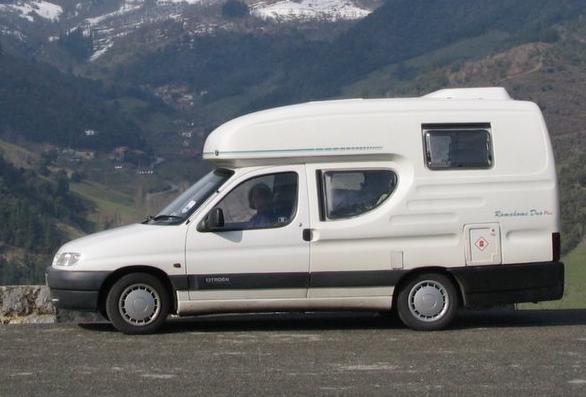
This morning we drove south to the pleasant little town of Rakvere leaving Modestine parked on a street of old wooden houses, some dating from the late 18th century, many with peeling paint and rotting window frames. Several have had their decorative doors restored while others have suffered fires and are just charred beams and blackened timbers.

Beside the church we found a rat. Not just any rat. This one jumped and hopped. We have no idea what it is but it behaved more like a gerbil than a rat. Maybe an east European rodent?

Inside the church the man on duty spoke to us in German as he knew no English. After telling us about the church he told us his native language is Finnish but he also speaks Russian because his family came from Finland at the point where it joins Eastern Estonia and Russia.

Rakvere has a hill. This is quite remarkable as generally Estonia is very flat. Prominently displayed on the hill as you arrive in the town is a plinth supporting a huge statue of an aurochs with long golden horns. It symbolises the extinction of these early cattle that once roamed the plains here.

Golden aurochs, Rakvere, Estonia

Beyond stand the ruins of the old castle. Here we have had a brilliant morning – a pensioners' Grand Day Out. Having qualified for the discount we proceeded to have every bit as much fun as the young ones. Dressing up in a tabard before entering was obligatory and once inside the battered walls everyone on duty was also dressed up, even the workmen restoring the well in the courtyard. There were all sorts of mediaeval things to explore and try out, battlements and turrets to climb and dungeons and wine cellars to descend into. Everywhere inside the castle ruins was lit by candles. We attempted jousting, spearing a sack, minting coins and dressing up as knights with helmets, swords and shields. I don't think we learned much but it was very different from the normal stuffy castle ruins I usually get dragged around and Ian enjoyed it quite as much as me. At midday we were scrambling up the unsafe crumbling spiral staircase to the battlements when we were startled by them firing off a tiny canon. It made a huge racket and sent smoke billowing across the courtyard.

Castle ruins, Rakvere, Estonia

Castle couryard, Rakvere, Estonia

Normally we try to avoid too many photos of us on the blog so please indulge us for once. It's a happy memory for us of a really good fun morning.

Space for another one at the Round Table? Rakvere Castle

Ian mints us some money, Rakvere Castle

Jill keeps a look-out, Rakvere Castle

Lord and Lady of Rakvere Castle, Estonia

Your horse is ready m'lady, Rakvere Castle, Estonia

Mediaeval sport with a lance and a swinging tree trunk, Rakvere Castle, Estonia

Now for the real thing, Rakvere Castle, Estonia

En garde! Rakvere Castle, Estonia

Where are you? Rakvere Castle, Estonia

The Russian Orthodox church on the main street was more exotic from outside than within where the icons were mainly 19th century and nowhere near as appealing as the Greek ones we saw earlier in the year. There was a Russian lady with a headscarf on duty. She told us she only spoke Russian but left us to explore the church on our own. We gave her our only word of Russian – meaning goodbye – and she beamed as she repeated it.

Russian Orthodox Church, Rakvere, Estonia

All that jousting had made us really hungry so we found a friendly self-service restaurant in the town centre where, because we didn't understand the menu, they lifted the lids off all the dishes for us to peer inside. Ian had fish with rice and salad while I had schnitzel with potatoes and salad. It cost £2.50 each and was delicious.

After visiting the rather upmarket hotel and spa complex, where we decided against a massage and having our nails manicured, we made our way to one of the 19th century wooden houses which is now a museum. The building is shabby and has lost most of its paint, while inside, some rooms showed how a family would have lived around the turn of the 19th century, while others displayed furniture from the 1930s. The lady on duty spoke a little English and as we were the only visitors she accompanied us round, adding much to our understanding of the exhibits. She was particularly proud of the piano owned by Arvo Pärt, who came from Rakvere and went on to achieve international fame as a composer.

Oldest house in Rakvere dating from mid-nineteenth century, Estonia

Piano of Arvo Pärt, Rakvere, Estonia

19th century dining room, Rakvere, Estonia

You don't find campsites by chance in Estonia and we needed to get down to Tartu, 125 kilometres away to find the next one. The road, once we found it, was level and empty, if somewhat bumpy. It was an easy if bouncy ride across the Estonian countryside. We had left the bogs and most of the forests behind by the time we'd arrived in Rakvere and from then on it was mainly grassland and arable crops with a few isolated farms. Outside of the towns Estonia really is a deserted country.

Tonight we are staying in the grounds of a guest house a few kilometres outside of Estonia's second city, Tartu which is about the same size as Exeter with around 100,000 inhabitants, some of whom we will meet tomorrow. The city does not have an official campsite but we found this place mentioned on the internet. There is only electricity, a loo and cold water but it's clean, friendly and convenient.

Wednesday 27th August 2008, Tartu, Estonia
Today the weather made up for yesterday. It has rained continuously the entire day and it really is becoming unpleasant. We've not got a dry pair of shoes between us and it's difficult keeping clean and comfortable when, apart from yesterday, we've had rain every single day since our sunny day in Moominland, weeks ago now. Almost all the roads in east Europe towns have cobbles where the water collects to form huge puddles that spew out as cars pass over them. So from the knees downwards we are usually dripping wet. Tonight we have returned to the same camping place as there is nowhere else suitable around the city. There are no showers or even hot water here. We'd really appreciate a bathroom and a washing machine this evening.

Despite the weather however, we found Tartu a very lovely university city. It is to Estonia what Uppsala is to Sweden or Oxford to England. Indeed, the university here was founded by Gustav Adophus of Sweden in 1632. It is particularly important for its medical school and has produced some of the leading names in medical research. The University buildings are scattered around the city. The main University building is by far the most impressive and beautiful building in the town. Unfortunately this, and several other major early 19th century buildings around the town were constructed on wooden piles which are now rotting, leading to subsidence and serious cracks in the walls. Years of neglect during Soviet times means many buildings are still awaiting funding to be restored. Meanwhile they sag and decay further. Away from the beautifully restored showpieces of the town centre there are many dilapidated buildings that remind us forcefully of some of the decayed architectural gems we saw in East Germany back in the 1970s.

King Gustav Adolphus of Sweden, Tartu, Estonia

Main university building, Tartu, Estonia

The main square fronting onto the River Emajögi is quite beautiful with the Town Hall at one end, the sides lined by 19th century neoclassical buildings. There are also several Stalinist era buildings around the town looking foreboding and heavy juxtaposed to these beautiful earlier buildings.

Town Hall and main square, Tartu, Estonia

Hoping the weather would clear we headed for the botanical gardens. They would be splendid on a sunny day but we quickly discovered the huge hot houses where we sheltered with the banana plants, cactuses and tropical creepers while the rain hammered on the glass roof.

It was just as wet this afternoon when we gave up trying to stay dry and set off to explore everything the city could offer. It has always been fond of statues of its worthies and there are dozens around the town. Many were removed for political reasons during Soviet occupation but some have since been restored and placed back in their original positions. Some are of a more general nature, including one of an imaginary meeting between two great writers with similar names from broadly similar bohemian backgrounds Estonia's Eduard Vilde and England's Oscar Wilde.

I'm just Vilde about Oscar and Oscar's Wilde about me, Tartu, Estonia


Childhood obesity is a problem in Estonia too

Estonia's Statue of Liberty, Tartu

F.R. Kreuzwald, author of the national epic "Kalevipoeg" based on Estonian legends, Tartu, Estonia

In the park on Cathedral Hill stands the university Observatory, erected at the start of the 19th century. One of its directors was Friedrich Georg Wilhelm Struve who surveyed the geodetic arc, now named after him, from the Arctic to the Black Sea between 1816 and 1855. This led to more accurate knowledge of the shape and size of the Earth. A number of these linked survey points and are now on the Unesco World Heritage list, including the one here at Tartu.

University Observatory, Tartu, Estonia

In the basement of one of the Stalinist era blocks of flats we discovered the former interrogation centre and cells of the KGB. Of course we have heard of the brutal techniques used on dissidents, objectors, patriots and ordinary innocent people, but it comes as a real shock to see just how and where they suffered in this outwardly beautiful city. Upstairs people are living in the flats and there is a mobile phone shop fronting onto the street. We walked right past the entrance, it is so inconspicuous. Through a heavy door, down a steep flight of steps we found ourselves in a narrow corridor with maroon painted walls and a stone floor. A picture of Stalin hung on the wall above the desk in the office. Through an iron grill the corridor led off with low, heavy iron doors leading into small cells, some with narrow bunk beds, all with buckets to act as toilets, and nothing else. Bare walls and no daylight. Prisoners would have been held there in darkness for indefinite periods while being interrogated and tortured. Several cells were used for solitary confinement. They were about the size of a phone kiosk with bare stone walls and no light. There was a ledge to sit on and the inevitable bucket. Prisoners would be held here sometimes for days at a time without food. Just half a litre of water a day, replaced by a thin soup every third day. The door to the cell was several inches thick with massive locks. The psychological effect on the victim is quite unimaginable.

Exterior of the "Grey House" used by the KGB, Tartu, Estonia

Basement corridor with KGB cells, Tartu, Estonia

Map of the USSR showing gulags, Tartu, Estonia

Two cells used for solitary confinement, Tartu, Estonia

Interrogation and restraining chair, Tartu, Estonia

Grainy photographs on the walls showed people who were victims of the Soviet secret service. Most were sent to work in forced labour camps in Siberia where they often died from starvation. There were mass deportations from Estonia. Women and children were not spared. Sometimes entire classes of schoolchildren would be herded up and sent off to work in the Gulags. Many never returned. It is too huge a topic to describe here and there is absolutely no way we can possibly empathise with the fate of the innocent people of these peaceful Baltic countries who had the misfortune to find themselves the immediate neighbours of a mighty state determined to spread its communist ideology across the world. They were quite powerless to resist the might of Russia and suffered accordingly.

People of Tartu during the build up to the 1940 "elections". Estonia

Tartu flattened after Soviet bombing in 1941, Estonia

It's ironic that we spent this morning in a building where plants and vegetables are fed, watered, given warmth, light and care. This afternoon we were in a different building where human beings suffered mental and physical trauma and were deprived of all of those things.

Moaning about the weather seemed almost obscene after seeing what went on in those cells. When we came out into the rainy streets, leaving the cells behind, we were conscious of how lucky we are to be living in a world today where we are free to do so. People of our own age around us in the streets here must all have been affected by the absorption of Estonia into the USSR. They would have lived through it all from the 1940s up until 1992.

We also visited the Faculty of Medicine at the university. This is in the oldest part of the university buildings, dating from 1802. It is in a poor state of repair and huge sums of money will be needed to restore it to its former state. We were given a guided tour by someone from the medical school very knowledgeable about its history, its famous alumni and the museum exhibits. These were all rather horrid to us being jars of human bits and pieces – pickled brains, a foot eaten by a rat, a skull with a bullet hole, an aborted 8 week foetus and much more. They did rather remind us of some of the jars of brawn to be seen on supermarket shelves in this part of the world, but a bit bigger. As we were the only visitors all day she was soon inclined to chat about other things. She warned us not to leave our umbrellas outside the door – "don't forget it is not long since this was Soviet Russia." She also told us that Estonians are watching current developments in Georgia with bated breath. They have no faith at all in Russian integrity. She said there are still many Russians in Estonia who cannot speak anything but Russian. Somehow they all get along okay. She has Russian neighbours where she lives and they are really nice, friendly people. However, we have the impression that they don't integrate socially.

Faculty of Medicine, University of Tartu, Estonia


Inside the 19th century anatomical theatre, Tartu, Estonia

So the day has been very full of thought-provoking incidents and despite the rain we have seen much of Tartu with its academic and civic buildings, its beautiful parks and statues. It has been a very difficult account to write about and quite impossible to condense so many impressions and emotions into something as trivial as a travel blog.